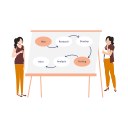
Ship Clarity in One Day: Visual Roadmaps for Early‑Stage Momentum

Today we dive into “Visual Roadmaps in a Day: Quick Prioritization for Early-Stage Startups,” showing founders how to translate scattered ideas into a crisp, living plan. You will learn to timebox decisions, score impact against effort, align stakeholders quickly, and leave with a simple, visual artifact that guides execution without bureaucracy. Expect practical prompts, founder stories, and facilitation tricks you can run before your next sprint planning session.

Start With Outcomes, Not Features

When time and runway are short, anchoring work to measurable outcomes prevents endless debates about pet features. By stating the change you want in user behavior or revenue first, you relieve your team from guessing and create shared language. Outcomes focus conversations, expose assumptions, and let experiments earn their way onto the roadmap. Invite your team to comment on proposed outcomes, suggest sharper metrics, and subscribe for follow‑ups where we review real examples from seed-stage teams.

Impact × Confidence × Effort

Rate impact on your North Star, multiply by a confidence factor that shrinks hype, and divide by effort estimated in person‑days. Confidence forces humility: founder enthusiasm is not market proof. Keep scales simple, like 1–5, and define what each level means. Revisit estimates after small experiments and adjust scores transparently. This evolving ledger becomes a shared memory, reducing circular debates and making tradeoffs clearer when urgency collides with limited engineering capacity.

RICE Versus ICE in Seed Reality

RICE adds Reach to Impact, Confidence, and Effort, useful when segments differ dramatically. However, early metrics can be noisy, so avoid pretending certainty. ICE is faster but can overweight gut feel; fix this with sharp definitions and time‑boxed estimation. Try both on the same backlog for thirty minutes and see which produces fewer ties and better learning bets. Share your results, and we will feature practical tweaks and pitfalls from other scrappy teams.

Tiebreakers and Risk Bundles

Ties happen. Break them by favoring items that unlock future options, reduce existential risk, or validate a critical go‑to‑market hypothesis. Consider bundling small tasks into a single experiment if they test one assumption together, reducing coordination overhead. Conversely, split big efforts if only part of the work is needed to learn the next truth. Document the tiebreaker logic so stakeholders see fairness, not politics, when priorities move during crunch weeks.


From Backlog Chaos to Visual Clarity

A wall of tickets can numb judgment. Visual grouping clarifies patterns, reveals duplicates, and forces succinct framing. Move stickies or cards into clusters by outcome, risk, or user segment, then label the clusters with crisp, action‑oriented phrases. Use color to distinguish experiments, delivery, and enablement. The result is a roadmap that communicates in seconds. Post photos or screenshots of your board in chat, and ask teammates to spot gaps your eyes missed.

A One‑Day Workshop Agenda That Works

{{SECTION_SUBTITLE}}

Pre‑Work and Inputs

Collect the latest activation metrics, top five user pains, sales objections, and any looming technical constraints. Ask attendees to submit three opportunities each, framed as outcomes. Trim the room to decision‑makers and doers. Send a two‑page brief, not slides, to level context. Pre‑commit to the schedule and rules of engagement. This preparation compresses meeting time dramatically and protects the workshop from becoming a discovery session masquerading as planning, a common early‑stage trap.

Ninety‑Minute Prioritization Sprint

Run silent scoring first, then discuss only the biggest score deltas to surface disagreements quickly. Use a visible table, capture tie‑breakers, and keep moving. If a debate exceeds five minutes, park it in a decision log and assign a follow‑up experiment. End by selecting a Now, Next, Later set sized to capacity. Celebrate cutting items. This sprint produces momentum and reduces anxiety by converting uncertainty into visible bets with owners and dates.

Align Stakeholders Without Endless Meetings

Decision Rights and Consent

Clarify who decides, who advises, and who must be informed. For two‑way door decisions, optimize for speed and learning; for one‑way doors, widen consultation briefly but timebox it. Write down the call and the reasoning to reduce relitigation later. Consent means “I can live with it,” not unanimous love. This small shift keeps momentum while respecting expert input, especially when cross‑functional stakes collide in early go‑to‑market experiments.

Narrative Memo Over Slides

A one‑page narrative memo forces logic, reveals leaps, and travels better than a deck. Structure it with problem, outcome, bet, evidence, and risk. Link to the live board. Share it before the meeting, then spend time on decisions, not reading. Ask for comments inline to capture concerns. This practice builds organizational memory and reduces meetings that exist only to transfer context, freeing your team to ship and learn faster.

Asynchronous Feedback Loops

Use short, structured forms or comment threads with deadlines for input. Tag the relevant card, summarize reactions, and note what changed. Thank contributors publicly to encourage future engagement. Keep loops tight: feedback requested today, decision tomorrow. This tempo shows respect and keeps momentum. Asynchronous rhythms help distributed or part‑time teams contribute meaningfully without slowing builders, which is vital when runway is measured in months and each week must count.

Keep It Alive: Rituals, Metrics, and Learning

A roadmap decays without maintenance. Establish lightweight rituals to review progress, update scores, and prune work. Tie metrics to outcomes, not tasks, and use small retros to capture lessons while they are fresh. Celebrate canceled ideas that saved time. Invite readers to share their weekly rituals in comments, and subscribe for our recurring prompts that nudge accountability without micromanagement, especially useful for small teams balancing discovery and delivery under pressure.

Cadence Check‑Ins with Scorecards

Hold a fifteen‑minute weekly check‑in with a single slide or board section showing goals, bets, status, and confidence changes. Avoid storytelling; focus on evidence. If confidence drops, update the score and decide the cheapest next learning step. This rhythm prevents drift and keeps the plan honest. It also trains the team to separate narrative optimism from data, building a culture that rewards clarity over charisma while still moving decisively.

Killing Work Gracefully

Create explicit criteria for stopping: exceeded timebox, negative signal, or higher‑leverage opportunity emerged. Announce the decision, capture what was learned, and archive artifacts with tags. Thank owners for the courage to stop. This ritual normalizes ending work as progress, not failure, and frees capacity for better bets. Share an example in the comments of something you ended early and what it unlocked, inspiring others to practice strategic subtraction.

Learning Loops and Small Retros

Close each mini‑project with a fifteen‑minute retro answering what surprised us, what we will repeat, and what we will change next week. Link insights to cards so lessons compound. Keep it blameless and curious. Turn one insight into a process tweak immediately. Over time, these loops transform the roadmap from a guess into an evolving map of truths discovered, energizing the team as momentum builds and uncertainty shrinks through deliberate practice.

Kizimevoxuxezaminili
Privacy Overview

This website uses cookies so that we can provide you with the best user experience possible. Cookie information is stored in your browser and performs functions such as recognising you when you return to our website and helping our team to understand which sections of the website you find most interesting and useful.